Industrial refrigerationAustralia · New Zealand · Pacific · Asia

Technician competency

Ammonia refrigeration technician training and competency.

A trade qualification is the foundation. Ammonia-specific knowledge, supervised practice and consistent assessment are what demonstrate that a technician is ready for the work they are expected to perform.

TECHNICIANS

The qualification gap

Trade-qualified is not the same as ammonia-competent.

A refrigeration qualification provides an essential trade foundation. It does not, by itself, prove that a technician has been trained and assessed for ammonia refrigeration work.

In Australia, ammonia-specific units sit as electives within the current Certificate III in Air Conditioning and Refrigeration. New Zealand has a separate ammonia unit standard, 30127, but holding the broader trade qualification is not evidence that every technician has completed equivalent ammonia training.

This pathway is intended for technicians with a sound commercial or industrial refrigeration background. General air-conditioning experience alone is not sufficient preparation for intrusive work on an ammonia system.

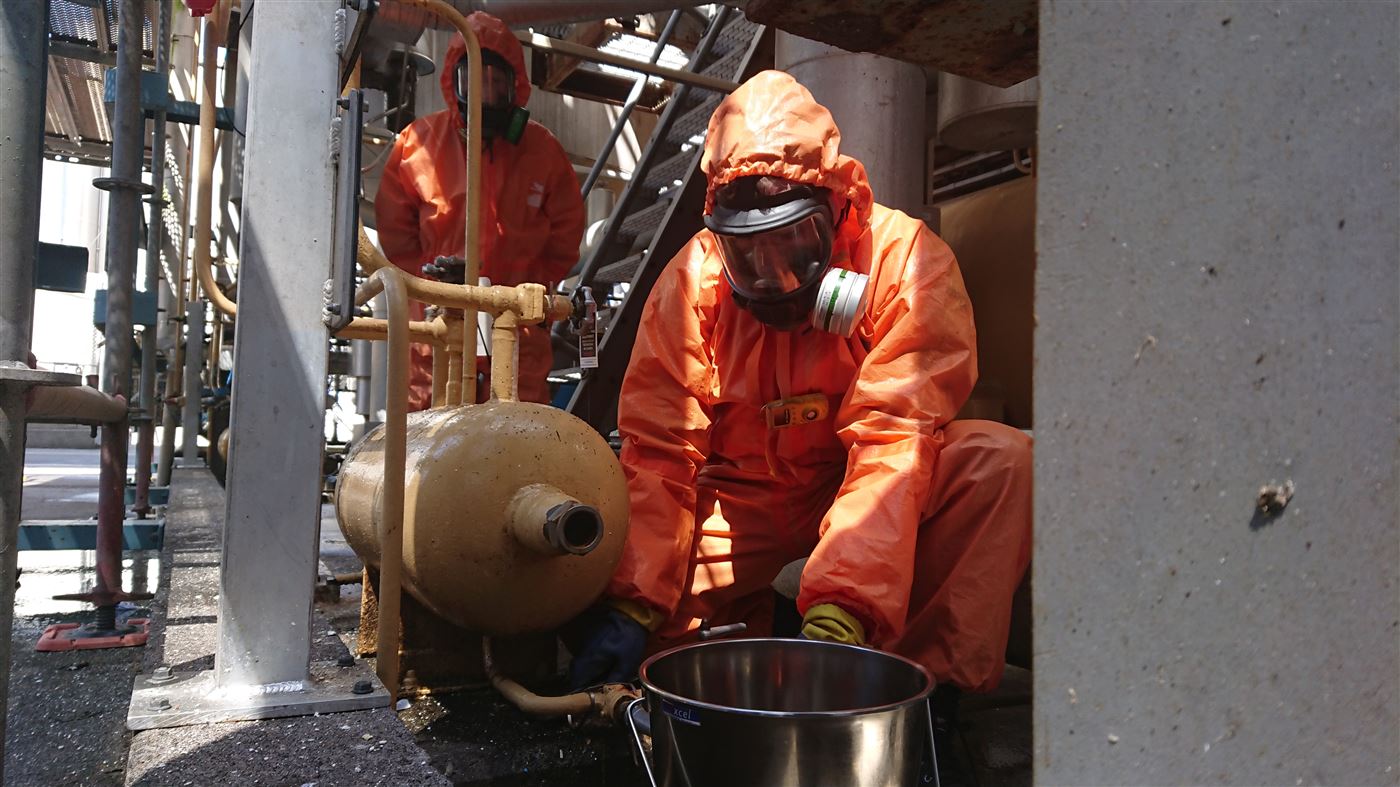
Two refrigeration workers wearing protective suits completing a supervised practical task on industrial ammonia equipment
Practical competency must be observed

Written knowledge is only one part of the evidence. Assessment must also confirm safe performance against defined task criteria.

Required evidence

Define the evidence before assessing the person.

We carefully record the evidence criteria required for each competency assessment. That may include written evidence, directly observed practical performance, or both. The assessor is not left to invent the standard on the day.

01 / Written

Knowledge and decisions

Written evidence confirms that the technician understands why the controls matter—not simply how to repeat a task.

  • Knowledge of ammonia properties, hazards and legal duties
  • Understanding of procedures, critical controls and task limits
  • Hazard identification and selection of appropriate controls
  • Scenario-based decisions, escalation and emergency actions
02 / Observed

Practical performance

Observation confirms that knowledge can be applied safely and consistently under realistic task conditions.

  • Preparation, permits, PPE and confirmation of task conditions
  • Application of the approved procedure and critical controls
  • Safe use of tools, equipment and plant information
  • Response to changing conditions, deviations and stop-work triggers
  • Completion, restoration, handover and accurate reporting
03 / Recorded

A defensible evidence trail

The assessment record identifies the task and criteria, the evidence considered, what the assessor observed, the competency decision and any limitations.

Assessment outcomeEvidence reviewedObserved performanceGaps or limitationsCorrective actionsReassessment trigger

A consistent pathway

Not just “trained on the job”.

On-the-job learning has value. Without a defined standard and consistent assessment, however, it can produce very different capability under the same job title.

Every technician should be assessed against the same required evidence—not the preferences of whoever happens to supervise them.
  1. 01

    Set the entry standard

    Confirm the technician's refrigeration foundation, relevant commercial or industrial experience, ammonia exposure and current limits.

  2. 02

    Formalise development

    Use defined learning outcomes, site procedures, supervised practice and clear progression—not informal exposure alone.

  3. 03

    Assess consistently

    Apply documented task criteria and evidence requirements across assessors, supervisors, branches and sites.

  4. 04

    Record and reassess

    Retain the evidence, decision and limitations, then identify when change, inactivity or performance concerns require reassessment.

Built from assessment experience

We have already built and applied the system.

In New Zealand, we developed, delivered and assessed our advanced ammonia programme against NZQA Unit Standard 30127 while operating with consent to assess that standard. At the time, we were the only specialist ammonia company in New Zealand with that assessment capability.

Unit Standard 30127 covers ammonia legislation, properties, applications, hazards, work procedures, equipment and emergency response. Its safety-awareness scope closely aligns with the Australian elective UEERA0005—Apply safety awareness and legal requirements for ammonia refrigerant, although the two standards are not formally equivalent.

Put simply, we take the consent-to-assess criteria we were approved to apply under Unit Standard 30127 and apply that same assessment discipline to your technicians.

Two practical options

Build it in-house—or use a system already proven in practice.

01

Build your own

We can help your company define role profiles, learning outcomes, written and observed evidence requirements, assessor guidance, record templates and reassessment triggers.

Your system. Structured properly.
02

Use ours

We can deliver formal ammonia training, apply the required evidence criteria, assess technician competency consistently and provide a clear record of the result.

Our framework. Applied to your people.

We can help you build it, or we can do it for you. Either way, the result should be repeatable, assessable and defensible.

Discuss your technician pathway

Start here

Know where your ammonia risk stands.

Start with a practical conversation about your plant, current concerns and what good looks like from here.

Email us Call us+61 (0) 422 229 828