Industrial refrigerationAustralia · New Zealand · The Pacific

Technical services

Control the risk. Strengthen the system.

Plant-specific ammonia safety support, grounded in engineering reality and built around how your refrigeration system is actually operated.

SERVICES

Capability

Practical help.
Clear outcomes.

Choose a focused engagement or connect several services into a longer-term improvement program.

Featured serviceCA / 01

Consequence analysis

The fundamental risk assessment connecting Safety in Design with credible Emergency Response Planning.

When engineered controls are removed from the picture, survival is shaped by release location, wind, structural barriers, topography and the direction people move. Generic worst-case assumptions can create fear without improving decisions. Site-specific modelling identifies the events that matter and the practical controls that reduce their impact.

Small investment. Significant return.

Changes such as elevating PSV or ventilation discharges by only a few metres can materially reduce ground-level exposure.

  • Model credible internal and external releases
  • Account for site weather, buildings and topography
  • Confirm safer muster and movement directions
  • Align ERP controls with evidence, not assumptions

Do your emergency arrangements reflect credible scenarios and the most likely wind directions at your facility?

Discuss consequence analysis
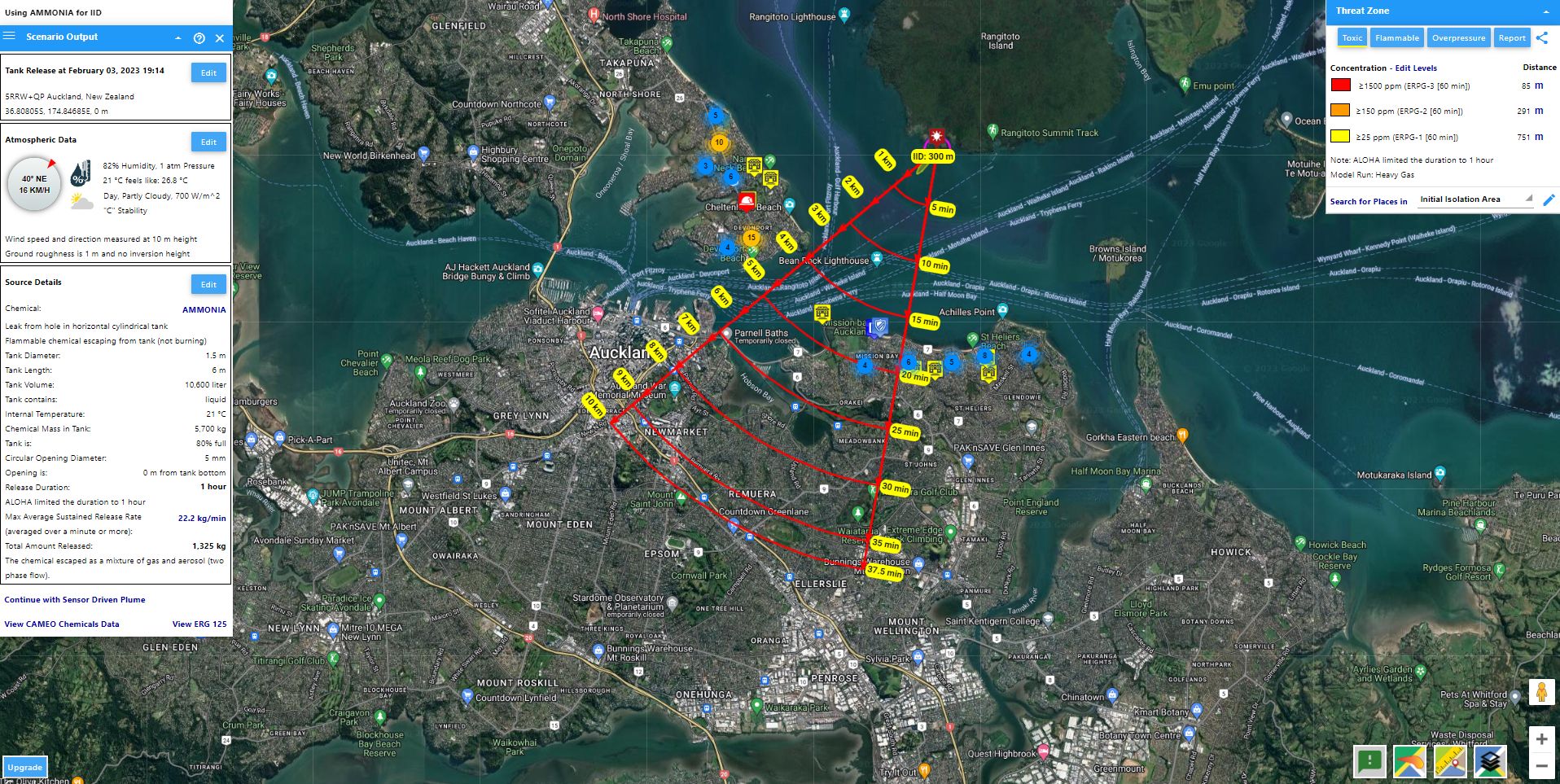
Example ammonia consequence analysis showing predicted toxic plume distances and wind directions
Site-specific modelling turns release assumptions into practical emergency decisions.
AS / 01A

Ammonia safety audits

Plant-specific gap analysis against legal duties, recognised standards and good industry practice.

  • Site inspection
  • Prioritised action plan
  • Pricing estimator
PS / 02P

Process safety management

Practical systems for managing integrity, change, competency, operational risk and assurance.

  • PSM framework
  • Mechanical integrity
  • Management of change
ER / 03E

Emergency readiness

Plans, drills and technical advice that prepare people for the first critical minutes of a release.

  • Emergency planning
  • Scenario exercises
  • Responder liaison
TR / 04T

Training and competency

Role-specific learning for site personnel, operators, technicians, supervisors and emergency teams.

  • Awareness to operator level
  • Face-to-face and online
  • Verification of competency
SS / 05S

Safe systems of work

Usable procedures for isolation, oil draining, charging, purging, maintenance and abnormal operations.

  • SOPs and SWMS
  • Permit controls
  • Task risk assessment
IA / 06I

Incident and technical advisory

Independent refrigeration expertise when an event, investigation or high-risk decision needs clarity.

  • Technical investigation
  • Regulator support
  • Remedial action review

Emergency response improvement road map

From ERP project to proven capability.

A practical sequence for connecting plant knowledge, consequence analysis, emergency planning, competence and progressively more demanding exercises.

  1. 01
    Remote works

    Foundation

    1. 01

      Start the ERP project

    2. 02

      Review existing PHA and mechanical-integrity reports

    3. 03

      Evaluate the facility layout and historical weather conditions

    4. 04

      Complete consequence analysis to establish preferred escape pathways and muster areas

    5. 05

      Deliver ammonia awareness eLearning

    6. 06

      Document verification of competency

  2. 02
    On-site and remote

    Discover

    1. 01

      Complete an emergency-management vulnerability and impact discovery survey

    2. 02

      Evaluate safety-critical elements through a site review

    3. 03

      Issue the summary-of-findings report

  3. 03
    Remote works

    Plan

    1. 01

      Issue the ammonia ERP template

    2. 02

      Complete internal ERP consultation

    3. 03

      Submit the final ERP to the fire service as required by applicable OHS or WHS regulations

    4. 04

      Consider an external fire-service tactical plan

  4. 04
    On-site and remote

    Train and test

    1. 01

      Deliver face-to-face ERP training supported by eLearning

    2. 02

      Run initial desktop scenario testing, level 1

    3. 03

      Escalate desktop scenario testing through levels 1 to 2 and 2 to 3

    4. 04

      Run integrated level 2 to 3 scenario testing with third-party agencies

  5. 05
    Continuous cycle

    Assure

    1. 01

      Confirm capability has been achieved

    2. 02

      Complete annual ERP review and stress testing

    3. 03

      Identify updates, revise the ERP and revalidate affected arrangements

Decision point A

Safety-critical deficiencies?

Yes: rectify and validate immediately, then confirm the affected emergency arrangements before implementation.

Decision point B

Updates identified?

Yes: update the ERP and revalidate the change. No: continue the training, exercise and annual assurance cycle.

Target stateCapability achieved

Workable plan. Available resources. Competent people. Tested under credible conditions.

The method

Not a shelf document.
A working safety system.

Every engagement connects engineering reality, legal duty and the people expected to make the controls work.

  1. 01

    Understand the plant

    Walk the system, verify the context and listen to the people closest to the risk.

  2. 02

    Find what matters

    Separate critical exposure from background noise and rank work by consequence and urgency.

  3. 03

    Make it workable

    Translate requirements into clear actions, procedures and accountabilities.

  4. 04

    Build capability

    Train, test and review so the system remains useful after the report is closed.

Start here

Know where your ammonia risk stands.

Start with a practical conversation about your plant, current concerns and what good looks like from here.

Email Paddy Call Paddy+61 (0) 422 229 828