
When toxic gas is released, movement is not automatically the safest response. The decision to shelter in place or evacuate must be based on the release, the location of people, the available shelter, the weather and whether a safe route actually exists.
The Houston ammonia release
On 11 May 1976, a tank semi-trailer carrying anhydrous ammonia struck a bridge column in Houston, Texas. The sudden release created a rapidly moving toxic cloud. Five people were killed and 178 were injured.
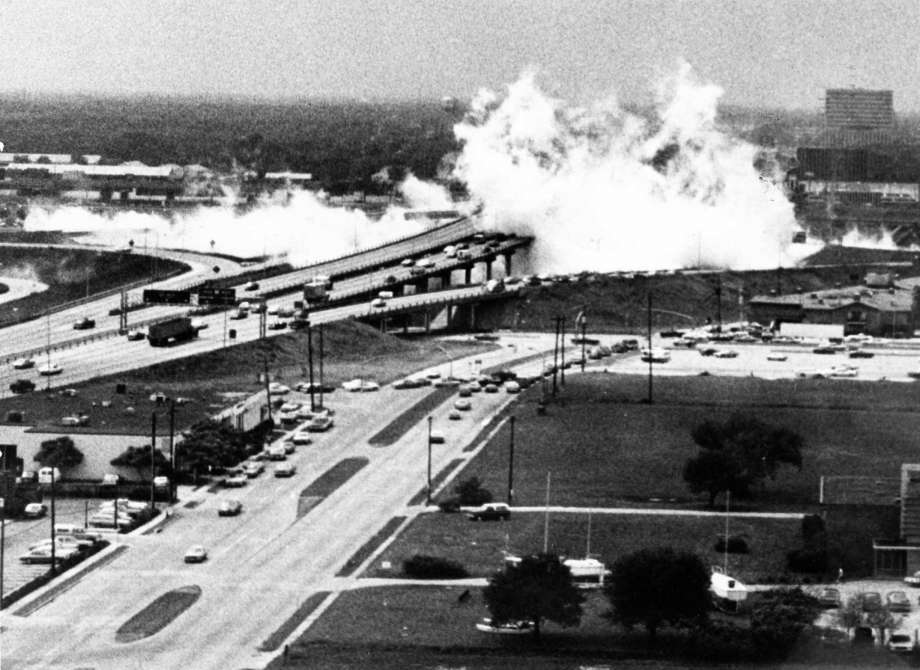
The incident demonstrated a difficult emergency truth. People who leave relative protection without understanding the plume can move directly into dangerous concentrations. Those who remain inside a reasonably sealed building or vehicle may receive a lower exposure while the cloud passes.
The subsequent National Transportation Safety Board investigation became an important reference for hazardous-material emergency planning. It reinforced the need for decisions that account for the actual release and available protection, rather than relying on evacuation as the automatic response.
“Look both ways before you cross the street. Stay in place first before aimlessly walking into danger because you hear an alarm.”
Shelter in place is not a universal answer
Shelter in place can reduce exposure when a building offers meaningful separation from the plume and can be closed down quickly. It is not always the safest or only response. The decision must compare the risk of remaining with the risk created by movement.
Shelter integrity
Can the building restrict outside air? Open doors, poor sealing, operating ventilation or structural damage may make it unsuitable.
Release severity
Very high concentrations close to the source, escalating plant conditions or a credible fire and explosion hazard may make continued occupancy unsafe.
Proximity and time
People close to the release may have only seconds to act. The nearest safe internal refuge may be more achievable than an exposed route across the site.
Safe alternatives
Evacuation may be preferable when a clear route leads laterally away from the plume and toward an upwind safe area without creating greater exposure.
Communications and welfare
A shelter needs reliable updates, accountability and the ability to sustain occupants until conditions are confirmed safe or controlled relocation is arranged.
Duration and dispersion
Topography, wind, atmospheric conditions and low areas can influence where gas travels and how long hazardous concentrations persist.
A practical first assessment
These questions should be considered in emergency planning, scenario exercises and the first moments after alarm notification:
- 01Can I see a visible plume or smell gas?
- 02Where is the safest place right now, and what escape pathway is genuinely safe?
- 03What are the wind direction, wind speed and weather conditions doing?
- 04Do the people at risk have suitable respiratory protection and training?
- 05Can the building be sealed, with doors and windows closed and ventilation shut down?
- 06What reliable information is available from detectors, plant personnel or emergency responders?
Plan the decision before the emergency
The safest response cannot be improvised from an alarm tone alone. Sites need defined decision authority, credible release scenarios, weather information, suitable refuge areas, safe evacuation options, effective communications and clear triggers for changing strategy.
Exercises should test more than whether people can reach an assembly point. They should test whether decision-makers can identify the plume, account for changing wind, choose between shelter and evacuation, communicate that choice and revise it when conditions change.
The question for every site
What is your plan, and when did you last practise it?
A defensible emergency plan gives people a safe initial action and the information needed to adapt. Clear thinking. Tested before it is needed.
Discuss emergency scenario testingThis article has been adapted and expanded from Pádraic Durham’s original LinkedIn article. Read the original on LinkedIn ↗